There’s that point toward the end of summer when you can feel the season beginning to shift.
The days are still warm, but the evenings are cooler and mornings have a nip. You might still be sitting outside with dinner, but suddenly you’re reaching for a sweater. The tomatoes and peppers are still coming out of the garden, but you’re starting to think about roasted vegetables, stews and everything that comes with fall.
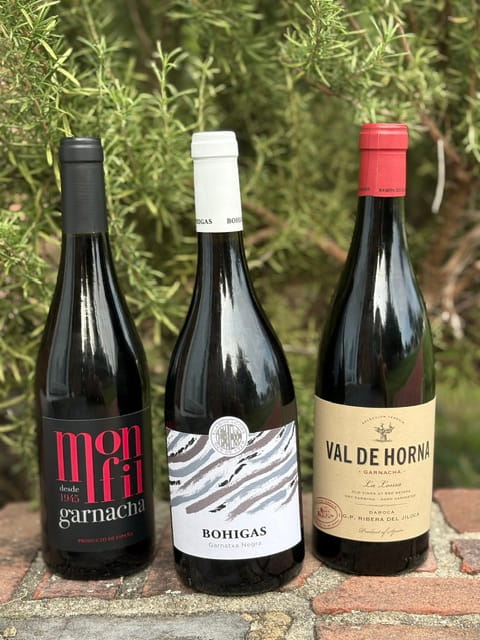
That’s exactly why I chose Garnacha as my Grape of the Month.
Garnacha still has that summer spunk, but there’s a hint of fall in it. It’s juicy, fruity and still likes to have some fun, yet it has enough spice, warmth and body to carry us into cooler evenings.
And perhaps best of all, Garnacha is incredibly food-friendly.
Garnacha or Grenache?
First, let’s clear up the name.
Garnacha and Grenache are the same grape.
In Spain, where the grape originated—most likely in Aragón—you’ll see Garnacha on the label. Cross the border into France and it becomes Grenache.
Today, it is grown throughout the world, including Australia, California, Washington State, South Africa and other warm, dry wine regions. But for me, its most fascinating expressions are still found in Spain and Southern France. And reasonably priced, I might add.
The grape loves sunshine. It is vigorous, drought-resistant and particularly comfortable in the dry, poor soils and warm Mediterranean climates found in these regions. In the Southern Rhône, Grenache Noir is especially well suited to dry, poor soils and produces fruity, round wines with plenty of volume on the palate.
That ability to thrive where other plants might struggle is part of Garnacha’s magic.
Garnacha in Spain
Spain is Garnacha’s homeland, and you’ll find it planted in several regions, particularly across northeastern and central Spain.
Aragón is especially important to the story of Garnacha. Look for wines from areas such as Campo de Borja, Calatayud and Cariñena, where warm days, old vines and challenging growing conditions can produce deeply flavored wines.
Then there is Priorat, where Garnacha—often alongside Cariñena—takes on a completely different personality.
Priorat’s famous llicorella soils, made up largely of fractured slate, force the vines to work hard. The roots search through cracks for water and nutrients, and yields can be tiny. What ends up in the glass can be concentrated, mineral-driven and powerful, while still retaining Garnacha’s beautiful fruit.
Depending on where it is grown and how it is made, Spanish Garnacha can range from fresh and juicy to seriously complex and age-worthy.
You’ll often find flavors and aromas of:
- Strawberry
- Raspberry
- Cherry
- Red plum
- Dried herbs
- White and black pepper
- Licorice
- Warm baking spices
With older vines and more concentrated styles, you may find darker fruit, earth, dried herbs and savory notes.
That’s what I love about Garnacha. It can be easygoing and fun without being simple.
Cross the Border and It Becomes Grenache
Head into France and Garnacha becomes Grenache, and nowhere is it more important than in the Southern Rhône Valley.
In fact, Grenache Noir is the most widely planted grape variety in the Southern Rhône.
Here Grenache is a major player in wines from Côtes du Rhône, Châteauneuf-du-Pape, Gigondas, Vacqueyras, Rasteau and many of the Côtes du Rhône Villages.
Unlike many Spanish Garnachas that can showcase the grape on its own, Southern Rhône winemakers frequently use Grenache as the foundation of a blend.
You know the familiar trio:
Grenache – Syrah – Mourvèdre. (GSM)
Grenache brings the ripe fruit, warmth and generosity. Syrah can contribute darker fruit, spice and structure, while Mourvèdre brings additional structure and savory complexity.
Of course, Rhône blends can involve far more grapes than those three.
Châteauneuf-du-Pape: Grenache Gets Serious
You can’t talk about Grenache in Southern France without talking about Châteauneuf-du-Pape.
Grenache Noir is the dominant grape in the appellation, where the Mediterranean climate provides abundant sunshine while the famous Mistral wind helps keep conditions dry.
And then there are those soils.
Châteauneuf-du-Pape is famous for its galets roulés, the large rounded stones you’ll see covering some vineyards. The appellation also includes red clay, limestone, sand and sandstone soils.
Grenache grown here can produce powerful, structured and complex wines capable of aging beautifully.
This isn’t just juicy Garnacha anymore.
This is Garnacha after it put on its fancy clothes.
Don’t Forget Gigondas
Just northeast of Châteauneuf-du-Pape is another region where Grenache shines: Gigondas.
Grenache Noir is the principal red grape here, growing among soils that include clay, limestone, chalky marl and sand. The vineyards around the Dentelles de Montmirail include highly porous, free-draining terraces of stony red clay as well as distinctive limestone formations.
The resulting reds can show ripe red and black fruit, spice and a fuller, more structured personality. With age, some develop earthy and even truffle-like characteristics.
If your idea of Grenache is simply a light, fruity red, wines like Gigondas and Châteauneuf-du-Pape will quickly change your mind.
Garnacha Likes to Struggle
Here’s one of the things to note about Garnacha: it doesn’t need to be pampered.
In fact, it often performs beautifully in places where the vines have to struggle.
Hot climates? Check.
Drought? It can handle it.
Dry, rocky hillsides? Bring them on.
Poor soils? Even better.
The Southern Rhône’s Grenache Noir is particularly suited to dry, poor soils, while Grenache Gris is noted for its ability to handle drought, strong winds and dry, rocky hillsides.
You’ll find Garnacha growing in slate, limestone, clay, sand, gravel and rocky soils depending on the region.
Those difficult sites can also be home to wonderful old Garnacha vines. Old vines naturally produce less fruit, but that smaller crop can give us wines with wonderful concentration and complexity.
Sometimes struggling a little builds character—even in grapes.
What’s in Your Glass?
Garnacha is generally known for its generous fruit, moderate tannins and potentially high alcohol, particularly when grown in warm climates. Grenache Noir naturally produces very fruity, round wines with weight and volume and has the potential to reach relatively high alcohol levels.
But don’t think every bottle is going to be a big bruiser.
A youthful Spanish Garnacha can practically bounce out of the glass with strawberries, raspberries and cherries. Another bottle, particularly from old vines or a more serious appellation, might give you darker fruit, spice, herbs, earth and minerality.
Southern Rhône Grenache may be richer and more savory, especially when blended with Syrah, Mourvèdre and other traditional varieties.
It’s one grape with a lot of personalities.
What Should You Eat With Garnacha?
This is where Garnacha becomes your friend.
Its combination of juicy fruit, spice and generally approachable tannins makes it incredibly versatile at the table.
Try it with:
- Grilled burgers
- Sausages
- Barbecue chicken
- Pork tenderloin
- Lamb
- Grilled or roasted vegetables
- Mushroom dishes
- Pizza
- Tomato-based pasta
- Paella
- Tapas
- Charcuterie
- Manchego and other aged cheeses
It also works beautifully with foods that bridge summer and fall.
Think There’s that point toward the end of summer when you can feel the season beginning to shift.
The days are still warm, but the evenings are cooler and mornings have a nip. You might still be sitting outside with dinner, but suddenly you’re reaching for a sweater. The tomatoes and peppers are still coming out of the garden, but you’re starting to think about roasted vegetables, stews and everything that comes with fall.
That’s exactly why I chose Garnacha as my Grape of the Month.
Garnacha still has that summer spunk, but there’s a hint of fall in it. It’s juicy, fruity and still likes to have some fun, yet it has enough spice, warmth and body to carry us into cooler evenings.
And perhaps best of all, Garnacha is incredibly food-friendly.
Garnacha or Grenache?
First, let’s clear up the name.
Garnacha and Grenache are the same grape.
In Spain, where the grape originated—most likely in Aragón—you’ll see Garnacha on the label. Cross the border into France and it becomes Grenache.
Today, it is grown throughout the world, including Australia, California, Washington State, South Africa and other warm, dry wine regions. But for me, its most fascinating expressions are still found in Spain and Southern France. And reasonably priced, I might add.
The grape loves sunshine. It is vigorous, drought-resistant and particularly comfortable in the dry, poor soils and warm Mediterranean climates found in these regions. In the Southern Rhône, Grenache Noir is especially well suited to dry, poor soils and produces fruity, round wines with plenty of volume on the palate.
That ability to thrive where other plants might struggle is part of Garnacha’s magic.
Garnacha in Spain
Spain is Garnacha’s homeland, and you’ll find it planted in several regions, particularly across northeastern and central Spain.
Aragón is especially important to the story of Garnacha. Look for wines from areas such as Campo de Borja, Calatayud and Cariñena, where warm days, old vines and challenging growing conditions can produce deeply flavored wines.
Then there is Priorat, where Garnacha—often alongside Cariñena—takes on a completely different personality.
Priorat’s famous llicorella soils, made up largely of fractured slate, force the vines to work hard. The roots search through cracks for water and nutrients, and yields can be tiny. What ends up in the glass can be concentrated, mineral-driven and powerful, while still retaining Garnacha’s beautiful fruit.
Depending on where it is grown and how it is made, Spanish Garnacha can range from fresh and juicy to seriously complex and age-worthy.
You’ll often find flavors and aromas of:
- Strawberry
- Raspberry
- Cherry
- Red plum
- Dried herbs
- White and black pepper
- Licorice
- Warm baking spices
With older vines and more concentrated styles, you may find darker fruit, earth, dried herbs and savory notes.
That’s what I love about Garnacha. It can be easygoing and fun without being simple.
Cross the Border and It Becomes Grenache
Head into France and Garnacha becomes Grenache, and nowhere is it more important than in the Southern Rhône Valley.
In fact, Grenache Noir is the most widely planted grape variety in the Southern Rhône.
Here Grenache is a major player in wines from Côtes du Rhône, Châteauneuf-du-Pape, Gigondas, Vacqueyras, Rasteau and many of the Côtes du Rhône Villages.
Unlike many Spanish Garnachas that can showcase the grape on its own, Southern Rhône winemakers frequently use Grenache as the foundation of a blend.
You know the familiar trio:
Grenache – Syrah – Mourvèdre. (GSM)
Grenache brings the ripe fruit, warmth and generosity. Syrah can contribute darker fruit, spice and structure, while Mourvèdre brings additional structure and savory complexity.
Of course, Rhône blends can involve far more grapes than those three.
Châteauneuf-du-Pape: Grenache Gets Serious
You can’t talk about Grenache in Southern France without talking about Châteauneuf-du-Pape.
Grenache Noir is the dominant grape in the appellation, where the Mediterranean climate provides abundant sunshine while the famous Mistral wind helps keep conditions dry.
And then there are those soils.
Châteauneuf-du-Pape is famous for its galets roulés, the large rounded stones you’ll see covering some vineyards. The appellation also includes red clay, limestone, sand and sandstone soils.
Grenache grown here can produce powerful, structured and complex wines capable of aging beautifully.
This isn’t just juicy Garnacha anymore.
This is Garnacha after it put on its fancy clothes.
Don’t Forget Gigondas
Just northeast of Châteauneuf-du-Pape is another region where Grenache shines: Gigondas.
Grenache Noir is the principal red grape here, growing among soils that include clay, limestone, chalky marl and sand. The vineyards around the Dentelles de Montmirail include highly porous, free-draining terraces of stony red clay as well as distinctive limestone formations.
The resulting reds can show ripe red and black fruit, spice and a fuller, more structured personality. With age, some develop earthy and even truffle-like characteristics.
If your idea of Grenache is simply a light, fruity red, wines like Gigondas and Châteauneuf-du-Pape will quickly change your mind.
Garnacha Likes to Struggle
Here’s one of the things to note about Garnacha: it doesn’t need to be pampered.
In fact, it often performs beautifully in places where the vines have to struggle.
Hot climates? Check.
Drought? It can handle it.
Dry, rocky hillsides? Bring them on.
Poor soils? Even better.
The Southern Rhône’s Grenache Noir is particularly suited to dry, poor soils, while Grenache Gris is noted for its ability to handle drought, strong winds and dry, rocky hillsides.
You’ll find Garnacha growing in slate, limestone, clay, sand, gravel and rocky soils depending on the region.
Those difficult sites can also be home to wonderful old Garnacha vines. Old vines naturally produce less fruit, but that smaller crop can give us wines with wonderful concentration and complexity.
Sometimes struggling a little builds character—even in grapes.
What’s in Your Glass?
Garnacha is generally known for its generous fruit, moderate tannins and potentially high alcohol, particularly when grown in warm climates. Grenache Noir naturally produces very fruity, round wines with weight and volume and has the potential to reach relatively high alcohol levels.
But don’t think every bottle is going to be a big bruiser.
A youthful Spanish Garnacha can practically bounce out of the glass with strawberries, raspberries and cherries. Another bottle, particularly from old vines or a more serious appellation, might give you darker fruit, spice, herbs, earth and minerality.
Southern Rhône Grenache may be richer and more savory, especially when blended with Syrah, Mourvèdre and other traditional varieties.
It’s one grape with a lot of personalities.
What Should You Eat With Garnacha?
This is where Garnacha becomes your friend.
Its combination of juicy fruit, spice and generally approachable tannins makes it incredibly versatile at the table.
Try it with:
- Grilled burgers
- Sausages
- Barbecue chicken
- Pork tenderloin
- Lamb
- Grilled or roasted vegetables
- Mushroom dishes
- Pizza
- Tomato-based pasta
- Paella
- Tapas
- Charcuterie
- Manchego and other aged cheeses
It also works beautifully with foods that bridge summer and fall.
Think grilled pork with roasted peppers, sausages with peppers and onions, mushroom pizza, grilled eggplant, roast chicken with herbs or a big platter of late-summer vegetables.
That is exactly where my head is right now as my garden winds down.
I’m not quite ready for heavy winter reds, but I’m beginning to move away from the crisp whites and rosés I’ve been reaching for during the hottest days of summer.
Garnacha sits right in the middle.
The Perfect Grape for the Changing Season
We’re entering that wonderful in-between time. Summer hasn’t completely packed its bags, but fall is knocking at the door.
Garnacha understands the assignment.
It’s juicy enough for a warm afternoon. It’s spicy and warming enough when the temperature drops after sunset. You can drink it with something coming off the grill today and pair it with roasted vegetables, mushrooms or pork as we head deeper into fall.
Summer spunk with a hint of fall.
That’s Garnacha.
So this month, pick up a bottle—or better yet, pick up two.
Try a Garnacha from Spain and a Grenache-based wine from the Southern Rhône. Taste them side by side and see what happens when the same grape speaks with two different accents.